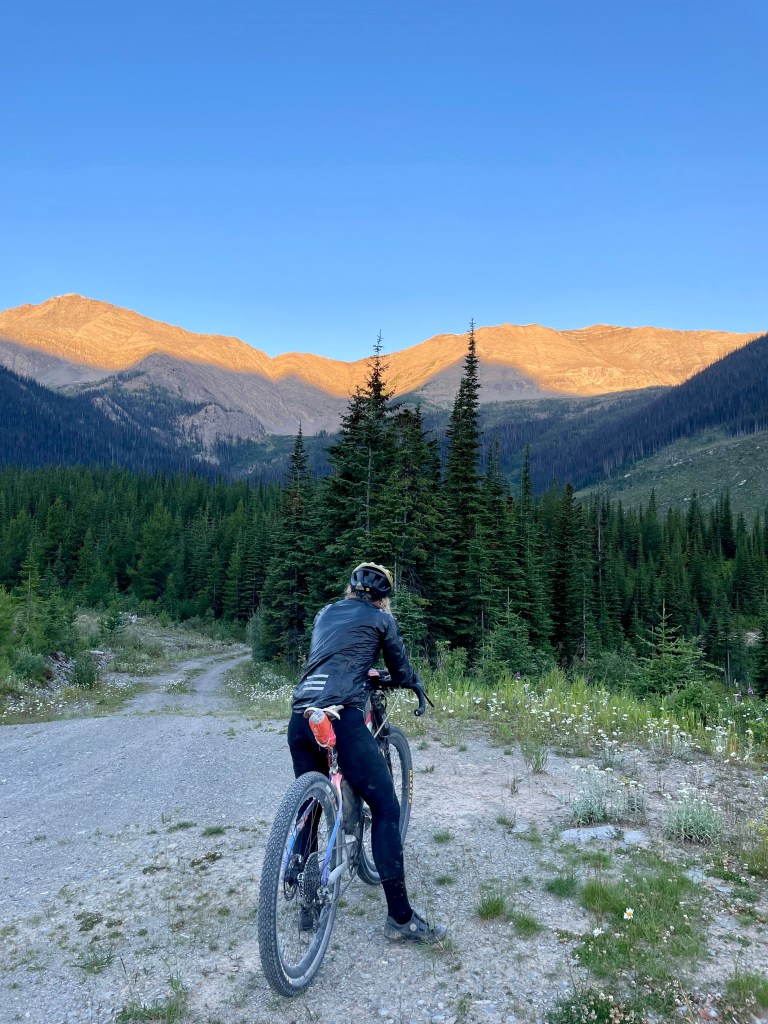
On July 22-23, 2023, I had the opportunity to travel to Cranbrook to compete in the Lost Elephant, a gritty ultra-distance race that explores the bikepacking paradise of the East Kootenay region, with two different route lengths to choose from. I opted for the 500+ km Jumbo (in contrast to the shorter-but-still-challenging Dumbo), which traversed remote peaks and valleys of indescribable beauty, as well as hike-a-bikes, water crossings, and a handful of bushwhacks.
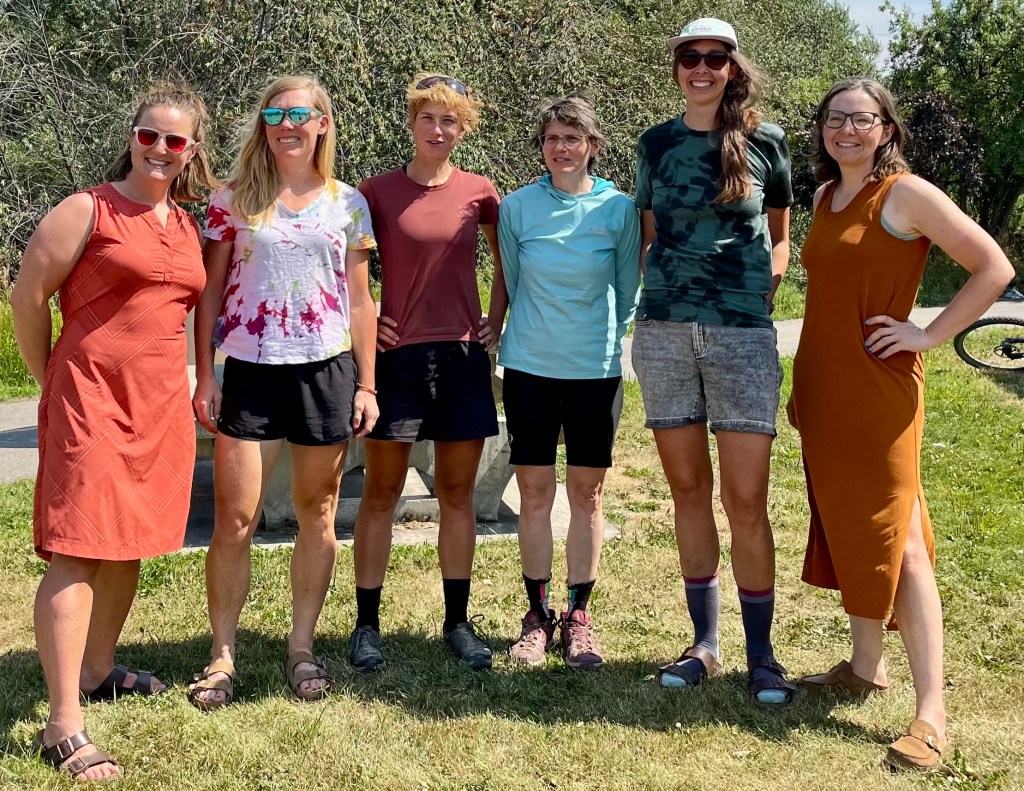
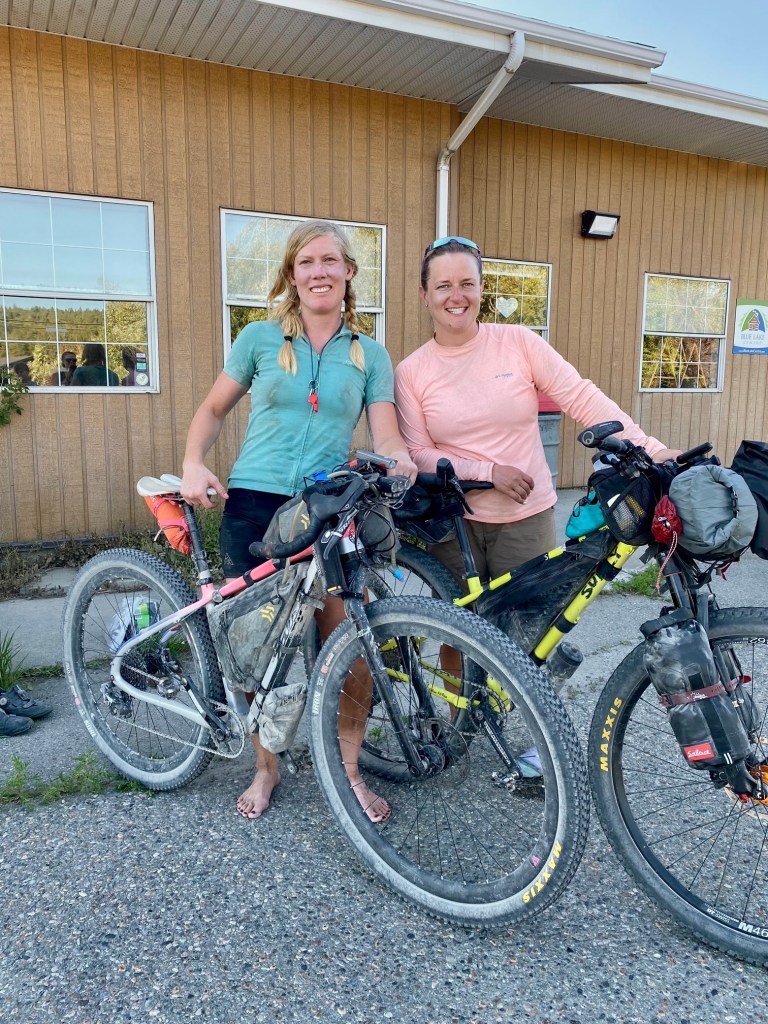
After 37 hours and 10 minutes, I was first across the finish line of the Jumbo. Equally exciting: four out of the top five finishers (including the top two) of the Jumbo route were women, with Zoé Chauderlot in second place, Alex Burk in fourth overall (third woman), and Julia Halawa in fifth overall (fourth woman). To read more about the experiences of the women of the Lost Elephant, visit the Town Bicycle. Below is a reprint of my own impressions, Q & A-style.

How did you prepare for the Lost Elephant? What made you decide to do the race?
The Lost Elephant’s reputation as a rough and rugged BC bikepacking race is what drew me out. At just over 320 miles for the Jumbo and within a six-hour drive from my home in the Okanagan, the logistics around the event seemed relatively simple: pack my rig and mentally prepare for a weekend of extremes. After twelve days across fourteen countries on the 2022 Transcontinental, this year I’ve oriented myself more towards shorter efforts with less prep work where I can really go hard, and still recover within a week or so. The Lost Elephant Jumbo fit this event criteria, plus the East Kootenays are a wild and beautiful place that I’d so far primarily explored from the seat of my road bike or vehicle.
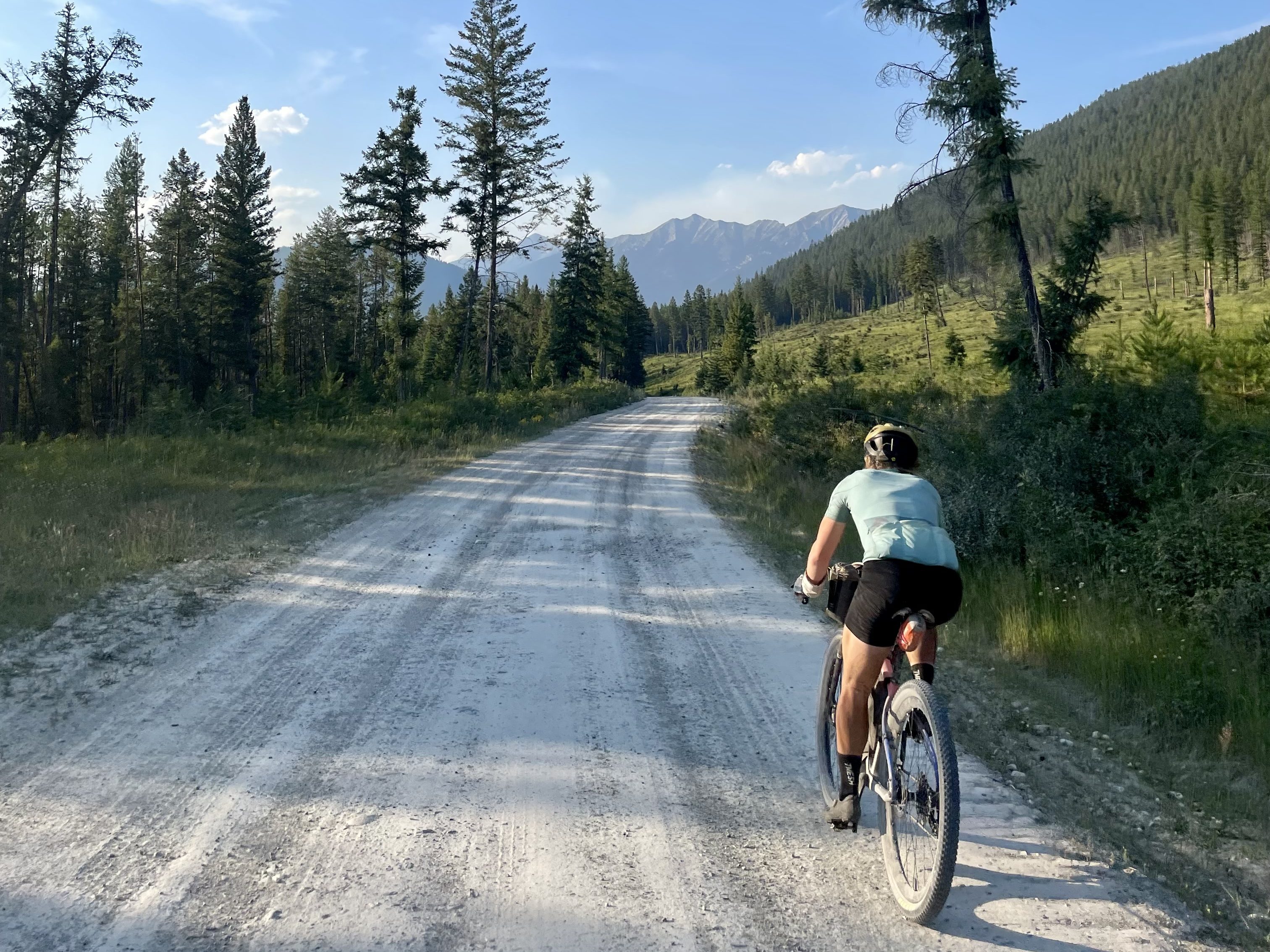
To prepare for this event, I interspersed big gravel days in the Okanagan, where I live, with short intense interval sessions on my indoor trainer—though admittedly, I find it hard to stick with indoor training when summer is in full swing. I reviewed the Ride with GPS file and plotted out how I’d handle my resupply (there was only one) as well as where the hike-a-bikes and major passes were situated. Knowing that, in addition to climbing over 30,000 feet I’d also be carrying my bike over precarious terrain, I opted for an ultra-light setup with no seatpost bag for ease of transportation. I also brought my bike in for a full tune-up and tire change, since I didn’t think the 44mm gravel tires that I had on would be sufficient for the chunky gravel descents (turns out, I was right).

Did you have any goals going into the race?
Since 2019, I’ve had a goal of competing at the pointy end and this time was no different. I was excited to see so many other women on the roster, as well other strong riders from the region. Due to the huge variety of riding surfaces and my lack of knowledge about the region, I didn’t have a specific finishing time in mind, only that I wanted to keep stop time low and keep rolling until my wheels brought me back to Cranbrook.
What bike were you riding? Is there any other gear you’d like to highlight?
I used a 2018 Salsa Cutthroat Force (named Amelia) with Light Bicycle wheels, a dynamo-powered kLite to help me right through the night, and a Redshift Sports Shockstop Suspension stem to ease out the bumps. I equipped my bike with Apidura Backcountry series bags (including a 3 L frame pack hydration bladder) but instead of a seatpost bag, I zip-tied a water bottle holder to my stem and stuffed my SOL bivvy in there.

Did you experience any lows or challenges during your race? What was that like and how did you get through it?
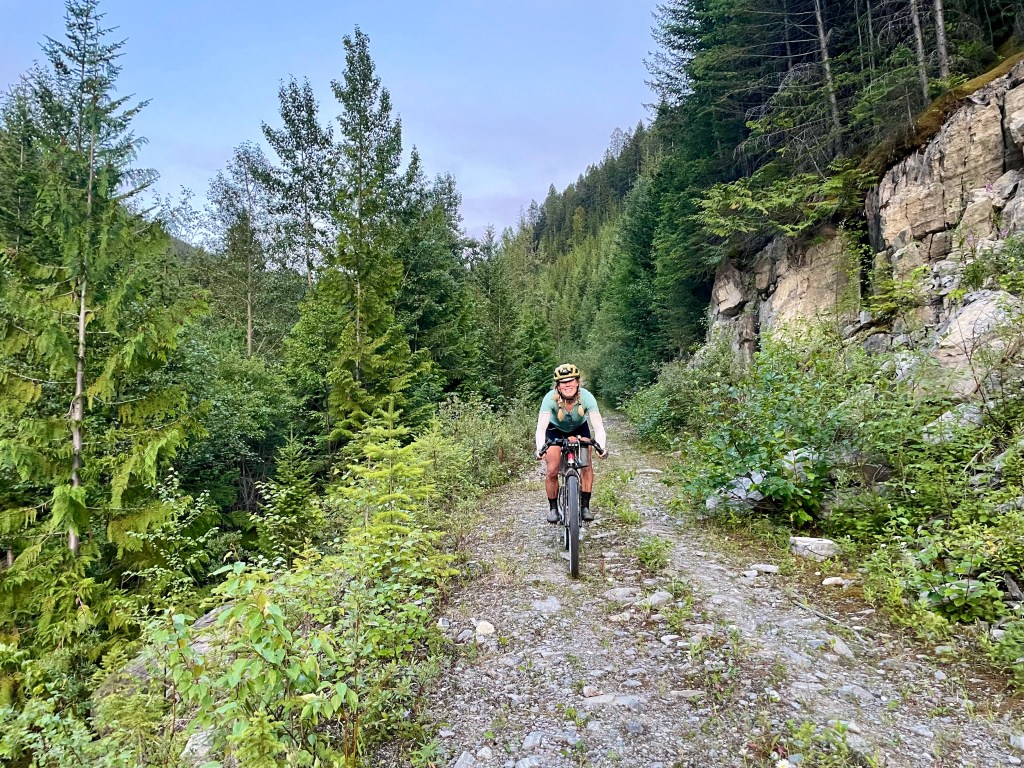
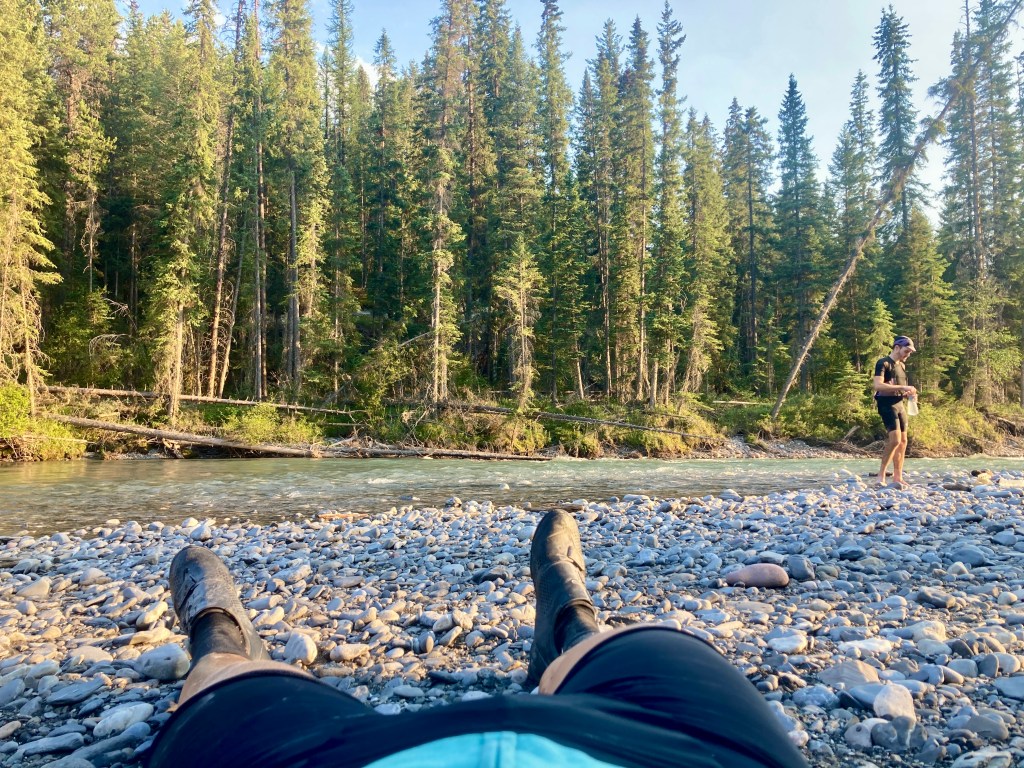
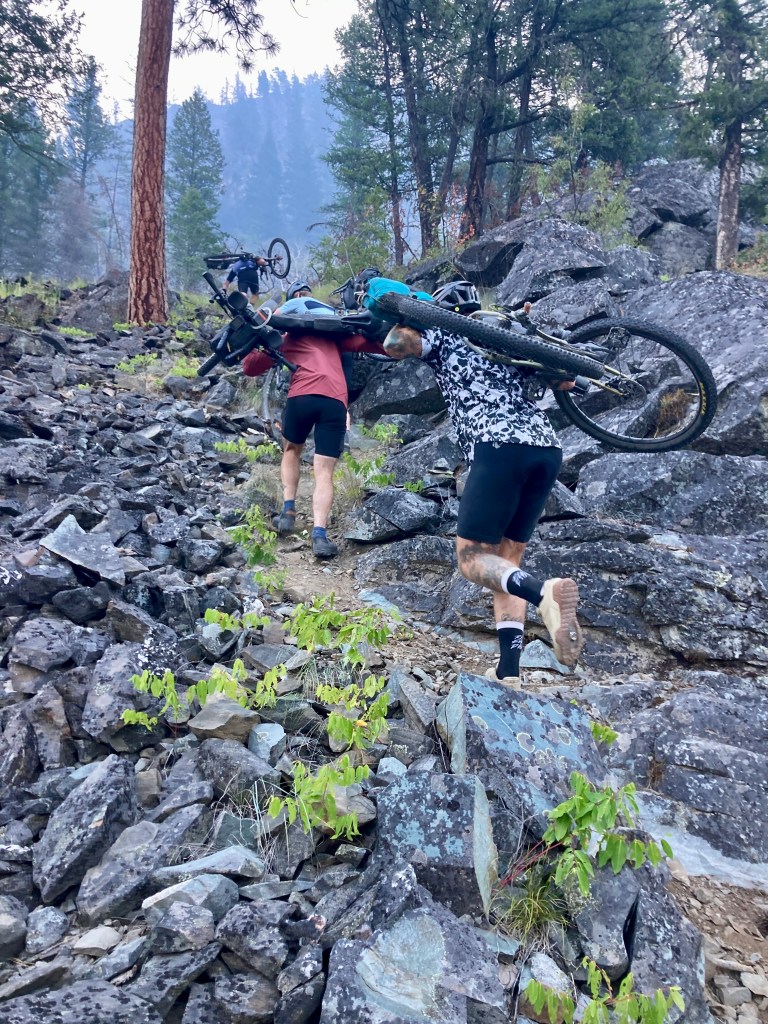
Despite being warned of the unexpected, I’ll admit that I didn’t quite realize that I’d be shouldering my bike for most of the 2,300-foot climb over Tegart Pass. About a third of the way up, I succumbed to the heat of the afternoon and laid down in a creek bed, cursing my own stupidity and willing my internal temperature to drop down to something manageable again. That’s how the fellow Okanagan bikepacker Jocelyn De La Rosa found me a few minutes later. It took all of two seconds for the delight in seeing his friendly, familiar face to replace my woeful thoughts, and within minutes we were trekking up the mountain together, laughing over the ridiculousness of it all as we took in the sights and smells of the woods. Despite being the first two riders in the field, we took our time on the climb: stopping to cool down as necessary and not pushing the pace. In addition to buddying up, I think lowering my expectations for myself and easing off the gas really helped me get through this challenging section without going into the red a second time.
What was a high point of your race? Did you have a favorite section or experience along the route?
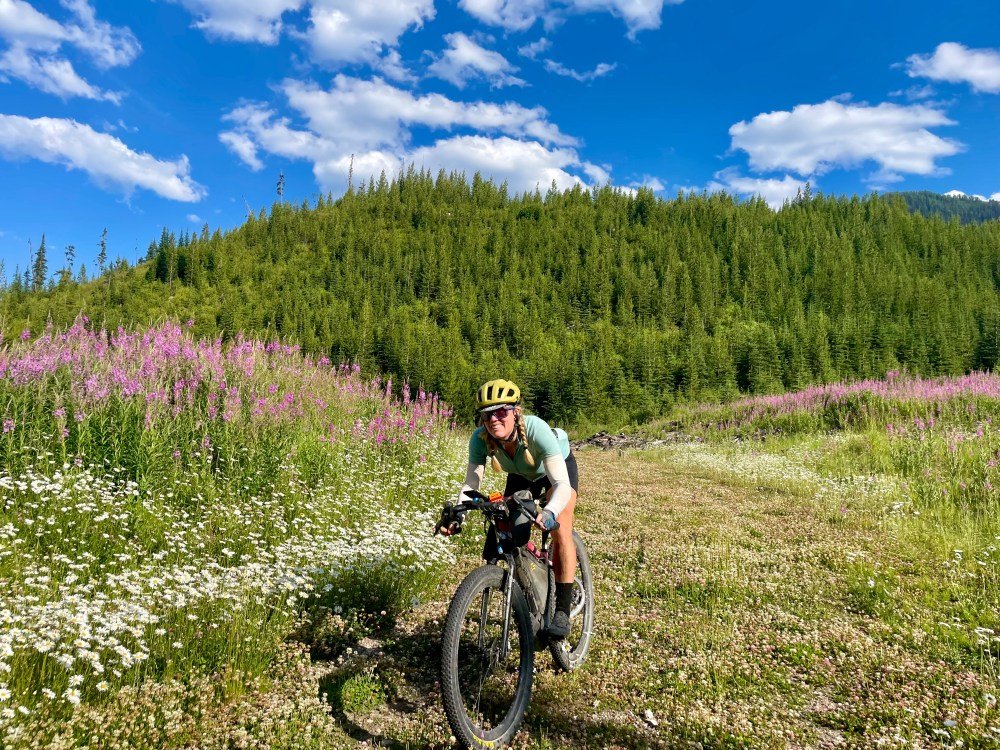
My highlight was descending into the Kootenay River area after the aforementioned hike-a-bike up Tegart Pass (plus a little more hiking on the descent, since I’m an insufficiently-skilled bike handler to navigate narrow trail and technical terrain). When the route finally became rideable again, it swept down a fast gravel forest service road through meadows of brilliant fuchsia fireweed with sweeping panoramic views of the surrounding mountains. I wish I could name some of them, but it was all too brief. All I could do was breathe in and be fully present.

Did you learn anything during your race that you’d like to share?
While not trying to glamourize sleep deprivation, with a series of “sprint distance” events this year, I feel like I’ve become my own test subject in the matter. While setting the new FKT on the Log Driver’s Waltz course in June, I rested for only ten minutes during my 43 hour, 33 minutes ride. I know that sounds like an awful thing for a person to willingly put themselves through, but in truth, I felt great 95% of the time! Based on the shorter distance of the Lost Elephant, I fully expected to ride through the night this time around as well. However, despite Jocelyn’s welcome company, I barely made it past sunset before my eyelids started drooping.
Part of this has to do with the mental and physical demands of a more technically challenging course. I also think it correlates with a higher level of fatigue going into the race. In contrast to the Log Driver’s Waltz FKT attempt where I’d managed eight or more hours of sleep the week prior, I was bogged down with work and hovering somewhere below six hours, with last-minute gear adjustments, anxiety, and nerves keeping me up most of the night directly prior.
In the future, I will do more to protect my rest leading into events where I know my energy will be severely depleted, and adjust my own expectations for how long I can ride without sleep. I’m grateful that, through a series of short catnaps, I managed to balance rest with speed, and that I carried the bivvy to enable sleep at higher elevation and colder temperatures. The fact that the route was so remote and infrequently-traveled meant that I could just pull over to nap undisturbed pretty much anywhere was also a huge bonus.
What did it feel like to get to the finish line? How did you celebrate?
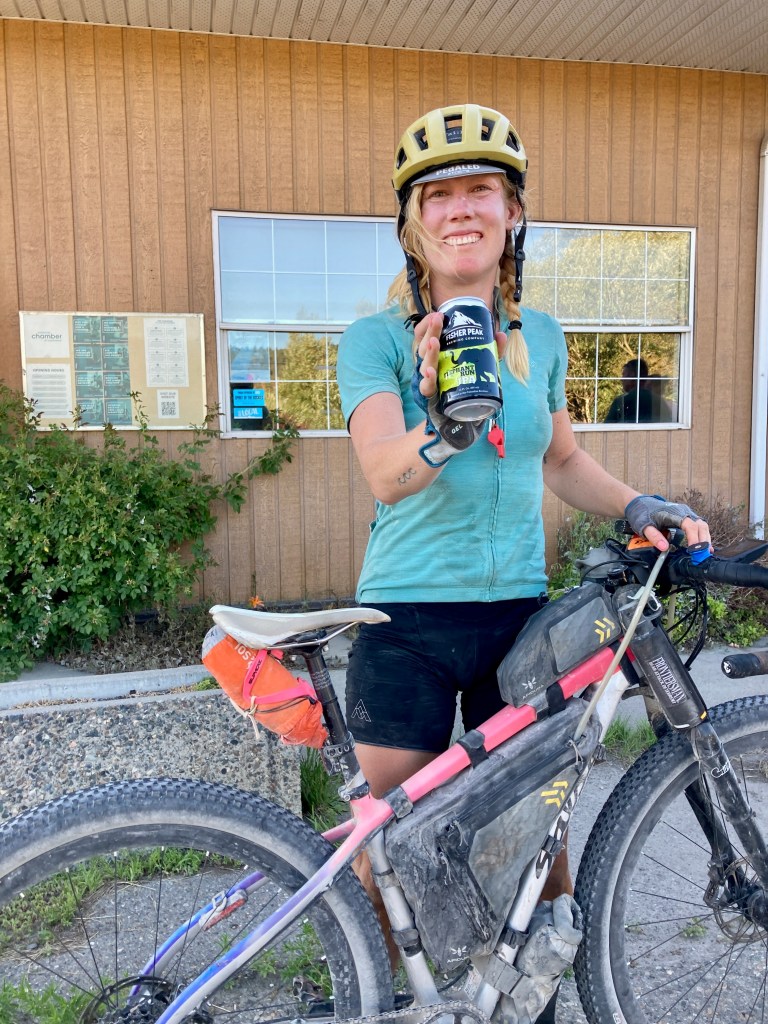
The route finishes on the flowy Chief Isadore Trail, which “tends to produce smiles on the faces of those with any energy left to spare,” according to the website. In my case, that’s exactly what it did; I was elated to be on the home stretch, tires in the dirt (not the loose, chunky rock that I’d become so accustomed to over the preceding day and a half), and rolling toward sunset. I celebrated with a perfectly paired Elephant Run IPA handed to me by a friend of my mom’s who surprised me at the finish line, among others.
I never expect anyone to be there when I reach the finish line, so it’s always a joy when there’s someone else to share the experience with. Solo or among others, I live for that moment when you cross the line and transition from the event being present to past tense; that glorious, liminal space when the two versions exist side by side, and, in a state of utter and complete exhaustion, you can recount the race as if you’re still in it, but with the assurance of knowing you don’t have to wake up tomorrow and call upon your legs to do the whole thing over again.
Is there anything else you’d like to share about your race?
Riding for extended periods with others is something I haven’t done in bikepack racing since I was first finding my footing in 2017-18. In general, I’m pretty happy pedaling alone, and using this time for deeper reflection. Going through the night with Jocelyn after he found me on the verge of heatstroke in a creek was an unusual occurrence for me. I enjoyed the camaraderie, and the opportunity to get to know someone better in a condensed time frame, without the obtrusions of things like cell phones. While I’m sure, once I pulled myself from the creek bed on Tegert Pass, I would have managed solo, I doubt I would have as much fun. Unfortunately, Jocelyn broke his handlebars around White River, 226 miles in. While this solved my internal debate about where we should cross the line together or go for a sprint finish, I was sad to see him unable to complete his ride. I’m sure he’ll be back for more Lost Elephant shenanigans in 2024.
Remember to check out the original piece, “Lost Elephant: Women Rule!” in the Town Bicycle for inspiring stories from the entire pack!

 Meaghan Hackinen