A Commuter’s Journey into Bikepack Racing
Darkness swallows my failing front light as I ascend into the foothills of Romania’s Parâng Mountains. I’m approaching the resort town of Rânca, according to my navigation unit. Within minutes the inviting flicker of guesthouses warms the inky night—the thought of a cushy pillow and cleansing shower enough to make my heart sing. But instead of stopping, I stay the course, inching further up the Transalpina toward the Transcontinental’s fourth checkpoint and the promise of another stamp on my brevet card.
As if on cue, my beam dies when Rânca’s lights disappear behind a switchback. I veer onto a nearby pullout and rummage through my top tube bag for a spare. After a few nights of bivvying in the wild, my devices are nearly out of juice, and I’m banking on enough charge in this backup light to see through to the checkpoint where I can plug in while I curl up in a heap of exhaustion on the floor.
“You’re so close,” I say aloud. “Now is not the time to wither.”
All day, I have been struggling: from the shores of the Danube to the sweltering, rutted highways of central Romania. More than once I watched competitors zip past from the shaded vantage point of a convenience store while I guzzled orange Fanta. Deep into the 2022 Transcontinental—a beautifully hard bikepacking race across Europe—my gas tank is running on fumes. But given a choice between backtracking to a guesthouse or continuing, the decision is easy. Wind surges as I clip back in, lending a dramatic note to my nighttime ascent. Moonlight plays off lonesome peaks. My muscles adjust to the rhythm of the climb, and I am more determined than ever to reach the checkpoint before resting.

I was not always one to race over high mountain passes under the cloak of darkness. Until university, I didn’t even own a bicycle. Then, in 2008, I began incorporating cycling into my soul-sucking ninety-minute commute to class. I picked up a used red mountain bike—since even the most novice among us knows that red equals fast—and my world opened up. Though I was only pedalling a few miles to the SkyTrain station, my outlook on the entire day shifted. More than movement, I was exercising my will: the wind raking through my hair an indisputable sign of newfound liberation—free-wheelin’ and untethered.
My first overnighter was with eight other women during archaeology field school on British Columbia’s Sunshine Coast the summer of 2009. We stuffed our rucksacks full of ham sandwiches, bungeed camping gear to our frames, and set out for land’s unknown. None of us knew what we were in for; a bartender drew us a map on the back of our bill to a place where we could pitch camp near the shoreline, and the next morning (having guessed we’d run out of supplies) he showed up with sliced oranges and water.
The following autumn I set out again—this time accompanied by my sister on dependable bicycles with waterproof panniers and a cook set—down the Pacific Coast to (almost) the tip of the Baja Peninsula. Touring seemed like the best way to travel: muscle-powered and sprinkled with close encounters among people and landscapes along the way. Between 2010 and 2013, I completed several more tours, including a (mostly solo) cross-Canada sojourn and another trip into Mexico, this time via the more mountainous Sierra-Cascades route.
Then in 2014, I moved to the Canadian Prairies for grad school and underwent a second ACL reconstruction (for my third complete tear). Physiotherapy became another task in my mountain of grown-up responsibilities, and taking time off to tour seemed more impossible each day. That’s where I discovered randonneur cycling (or audax): a non-competitive form of distance cycling that I could squeeze into weekends, satisfying my longing to explore without jeopardizing my studies.
I might have been entirely content to rack up miles as a randonneur cyclist had Lael Wilcox not won the 2016 Trans Am Bike Race. But seeing my gender reflected in a race winner put ultra-endurance racing on my radar, and there was no going back. I wanted in.
The question was, How? I was still riding an all-purpose bike with flat bars; I’d never touched electronic navigation, clipless pedals, or a bivy bag. It was a massive leap—and a daunting learning curve—to transition from those long, languid days of touring (or the more intense bursts of weekend brevets) to ultra-distance racing.
With the benefit of hindsight, I’d like to highlight some of the challenges I faced in becoming a competitive bikepacker. Though what follows is based on my unique identity and experience, I hope that anyone finding their way into the sport can benefit.



Gear Acquisition
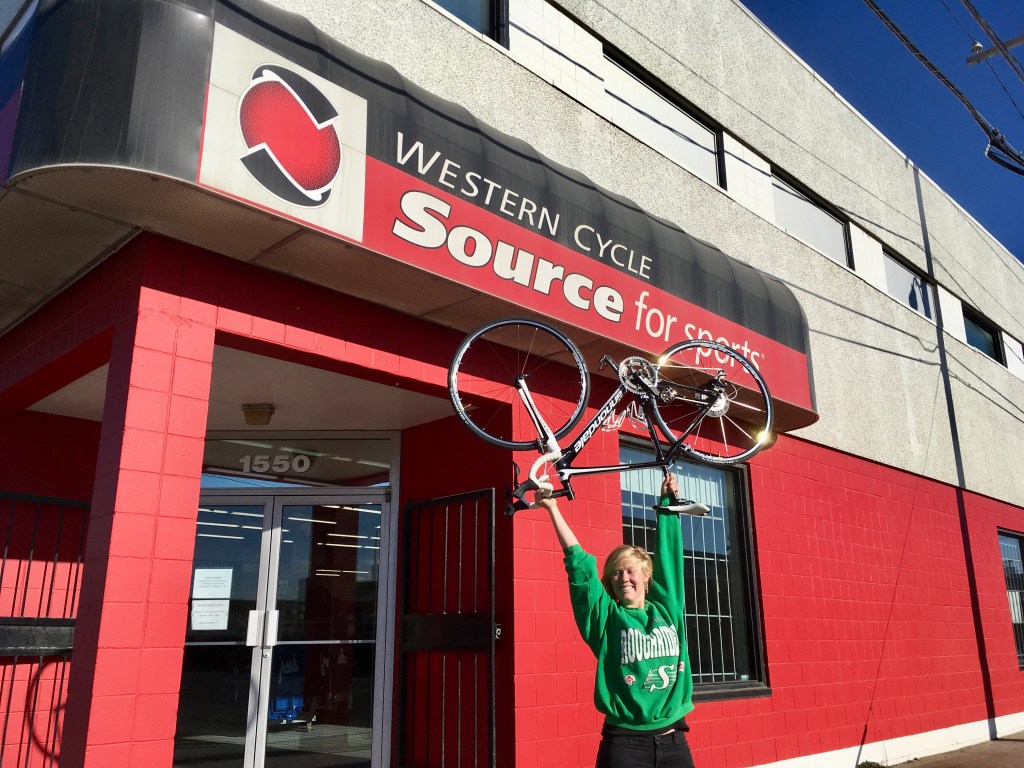
I purchased my Cannondale Synapse Tiagra—a “low to mid-range carbon road bike” that has seen me through road events from the Trans Am to the Transcontinental—on my then-boyfriend’s credit card. I was working part-time while wrapping up grad school and even with my summer bonus, I didn’t manage to save enough. Clipless pedals, cycling shoes, and aerodynamic bags would have to wait another few paycheques until I paid back my boyfriend. Looking back, I wonder how things might have panned out differently without his generosity. I probably would have looked for a used bike within my budget (incidentally, my next two bikes were acquired second hand).
While I faced similar financial hurdles in gear acquisition before my first big tour down the coast, the fact that I was preparing to compete upped the stakes. In both instances, I happened to be graduating from a post-secondary program, and money was tight. Though entry fees are typically low, expenses related to bikepack racing can add up fast. To purchase vital equipment like a light-weight rain jacket, GPS navigation unit, and better lights, I picked up a second part-time gig and donated blood plasma (yes, you can get paid for this in some provinces). I also cut corners where I could: I stitched together an ultra-light sleeping bag from a $20 Kirkland quilt and accepted hand-me-down gear from friends. Whenever I heard the phrase “buy cheap, buy twice,” a little voice in my head shouted out in protest: What happens if you can’t even afford the cheap stuff—what then?
The fact that I didn’t really know what I was supposed to buy in the first place added another dimension to the challenge: sure, there was Google, and of course the friendly randonneurs. However, I would have benefited from speaking with another ultra-endurance racer—someone who could advise me on how to best spend my limited budget.
Safety
As touring cyclist, I always erred on the side of caution. I often traveled with others, slept out of sight when not at a campground—usually with my bear spray or Leatherman by my side—and outside of commuting never rode at night. But randonneur cycling yanked me from my comfort zone. Suddenly, I was pedalling through every conceivable hour and weather condition, and napping in all sorts of strange public places. I made countless beginner mistakes, and failed to carry sufficient nourishment, clothing, or lighting for night riding—yet avoided any real consequences because a better-prepared randonneur was always there to assist. In this slow, prodding way I learned what I needed for longer stints in the saddle, and gradually became a self-sufficient endurance rider.
While cycling is generally a safe mode of transportation, I do believe that long-distance self-supported racing carries a slightly elevated risk. From personal experience, I know that I’m more prone to taking chances in the heat of competition, when both pride and rankings are on the line. Over time, I’ve created a set of personal guidelines for safer travel: I wear a high-vis reflective vest after dark, pull over when I’m feeling doozy, and avoid situations like night riding in adverse weather conditions, leaving my bike unattended at large truck stops, and sleeping in places that give me bad vibes. I carry a whistle around my neck and bring a SPOT device—even on training rides—so that if something does happen, I’ll be traceable and able to call for help if I’m out of cell service.
I’ve also come to realize that safety is personal and circumstantial: in areas with increased crime or big wildlife, I take more precautions whether travelling or bivying. Though it hasn’t happened yet, the fear of gender-based violence still kicks around the back of my mind when I’m riding alone, particularly in places where, as a woman, I am noticeably underrepresented—for instance, backcountry gravel routes favoured by hunting parties and off-road-vehicle enthusiasts. Sometimes, I wonder if I’m being paranoid; other times, I fear I’m not being cautious enough. Based on my experience so far, however, the rewards of solo travel outweigh the risks, and so I try not to dwell on potential negative outcomes.


Information & Knowledge
I’ve already alluded to the learning curve I faced, but this was also an exciting time for me: knowing there were athletes out there doing the seemingly impossible—and in the not-so-distant future I would be setting out on my own similarly audacious adventure—kept me scouring the internet for information. I found inspiration in podcast interviews and blogs, which helped me grasp the unpredictable nature of competing, both the soaring highs and knee-deep-in-peanut-butter-mud lows.
Over the years, I’ve become a bolder knowledge-seeker: if there’s someone I think I would benefit from talking to, I invite them out for coffee and pick their brain. Social gatherings the bookend bikepacking events are also great places to connect. During my first races (the Trans Am and North Cape-Tarifa) I mostly rode with others and learned valuable lessons—like how to descend in the drops and how to make a cue sheet—along the way. While I prefer to compete alone these days (and in events like the Transcontinental, riding with others is prohibited) I still treasure the camaraderie of those early experiences, and hold close to my heart the insights I gained.
In addition to outside knowledge, as an experiential learner I still had to figure a lot of things out for myself—usually the hard way. Since race day isn’t an ideal time to be juggling unknowns, I’ve learned to test new strategies and kit before important events on a shakedown ride.
Training & Fitness
Experience with big days in the saddle from bicycle touring gave me a leg up when I started racing. Even though I wasn’t covering as many miles then, I developed an intimate familiarity with life on the road, away from the comforts of home.
However, it had been a long time since my last tour when I got curious about competitive ultra-endurance cycling, and on top of that, the concept of training between tours was entirely foreign to me. When I realized that I would have to level-up my game if I wanted to complete the full brevet series within the cut-off times, I was scared: I’d never strayed far from city limits without my full touring kit before! What if I had a disastrous mechanical, got caught in a lightning storm, or an unrelenting headwind prevented my return?
Of course, those things (and more) all happened, and when I couldn’t take care of something myself, I had to decide between calling my then boyfriend (the same guy who generously picked up the bill for my road bike), knocking on the door of the nearest farmhouse, or hailing a passing pick-up truck for a ride.
The upside was that after experiencing the scenarios I’d been dreading, I grew more courageous. I learned to pack a rain jacket, extra snacks and tools, and a Ziplock bag to protect my iPhone. I also smartened up enough to check the wind and weather forecast. Later, I discovered indoor training as well as structured intervals, however I think the most valuable thing in the beginning was simply racking up those solo miles to improve my confidence, fitness, and self-sufficiency.
In terms of off-the-bike fitness, I continued doing exercises prescribed by my physiotherapist and incorporated a short strength and conditioning routine that required minimal equipment. A scattershot approach, sure. But I didn’t get injured so we’ll call it a success.


Conclusion
If you’re read this far and want to know more, check out my memoir, Shifting Gears: Coast to Coast on the Trans Am Bike Race, which charts my unforgettable first encounter with ultra-endurance racing over (nearly) 25 days in the 2017 Trans Am Bike Race.
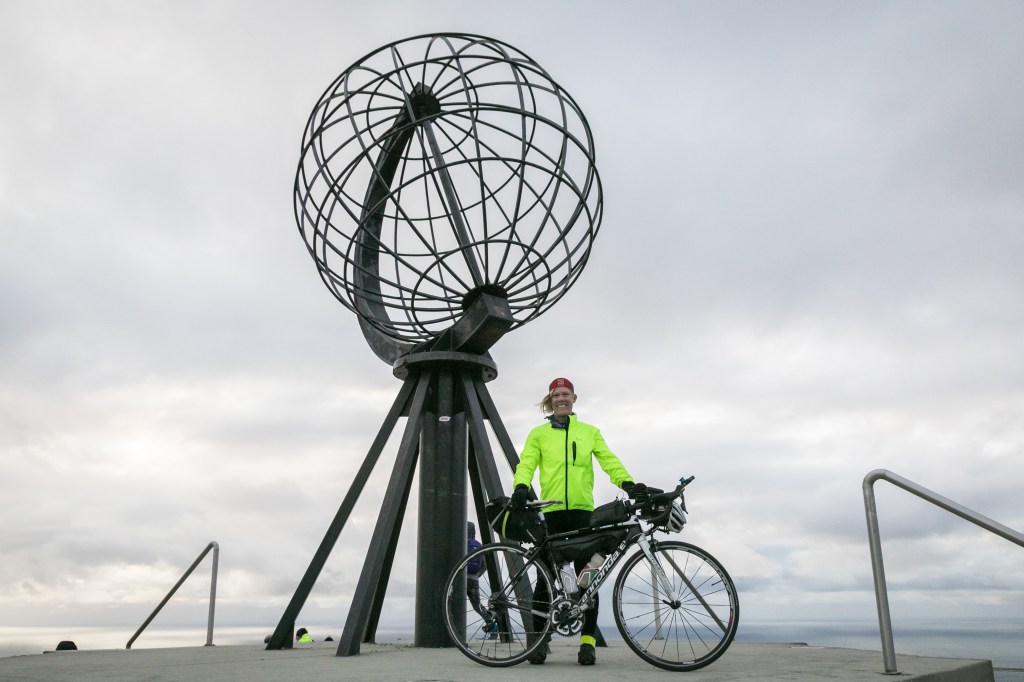
My journey into competitive self-supported racing has brought me so much joy. While I stumbled to find my footing at first—and we didn’t even touch on nutrition!—the rewards have been immense. Looking back from the vantage point of Burgas, at the finish line of the Transcontinental, I can see just how far I’ve come: from gaining proficiency in route planning and navigation to believing that I can do hard things alone.
In bikepack racing, I’ve found an outlet for my competitive spirit amid some of the most gorgeous terrain I’ve ever encountered. While long-distance racing isn’t for everyone, if you’re curious about what it might be like to go further and faster, then I encourage you to give it a try. I can’t promise it’ll be all sunshine and rainbows, but I guarantee you’ll expand your horizons, and learn something of yourself along the way.

 Meaghan Hackinen